Welcome back!
Ready to check out?
You're just one click away from fantastic style and even better savings!
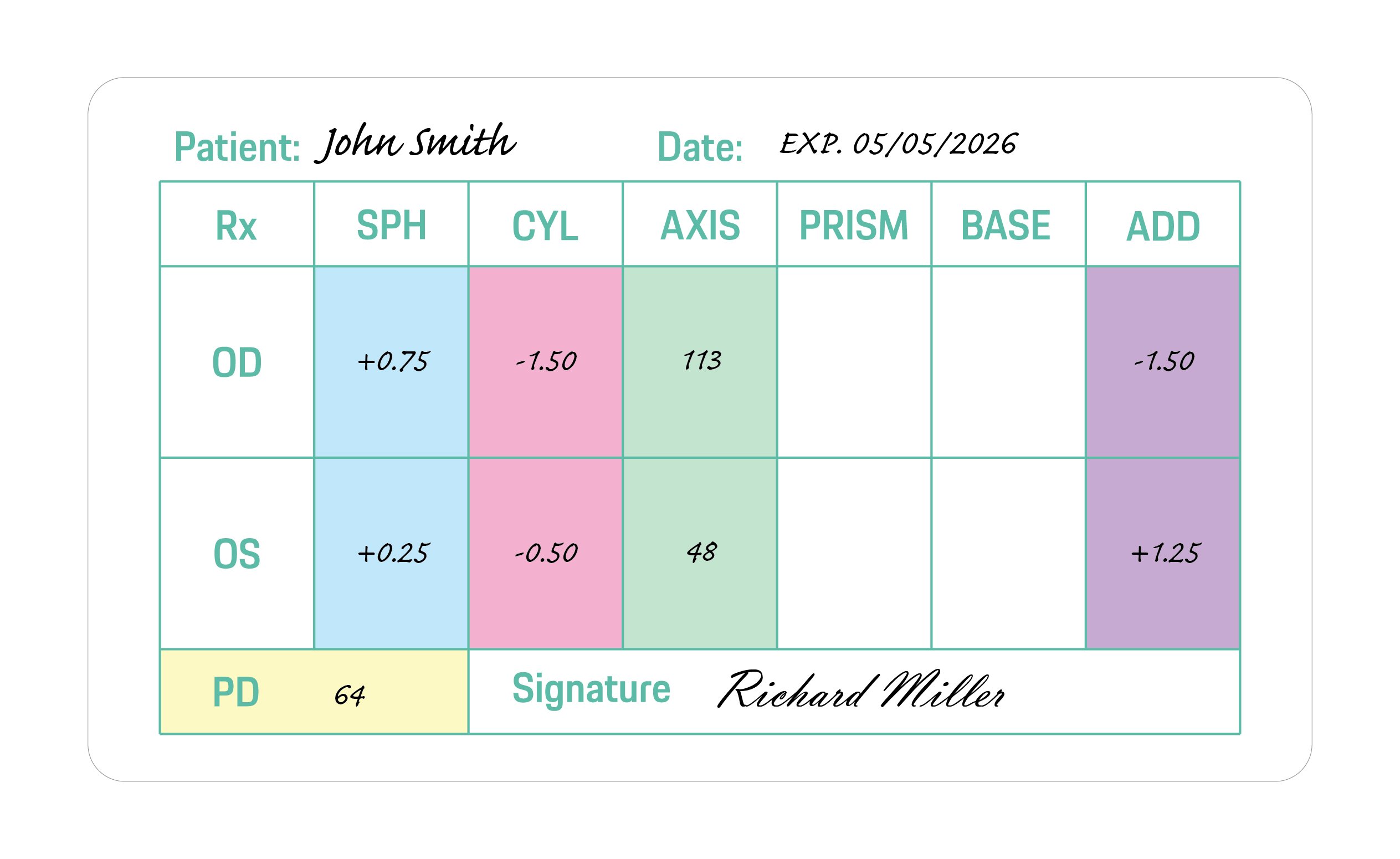
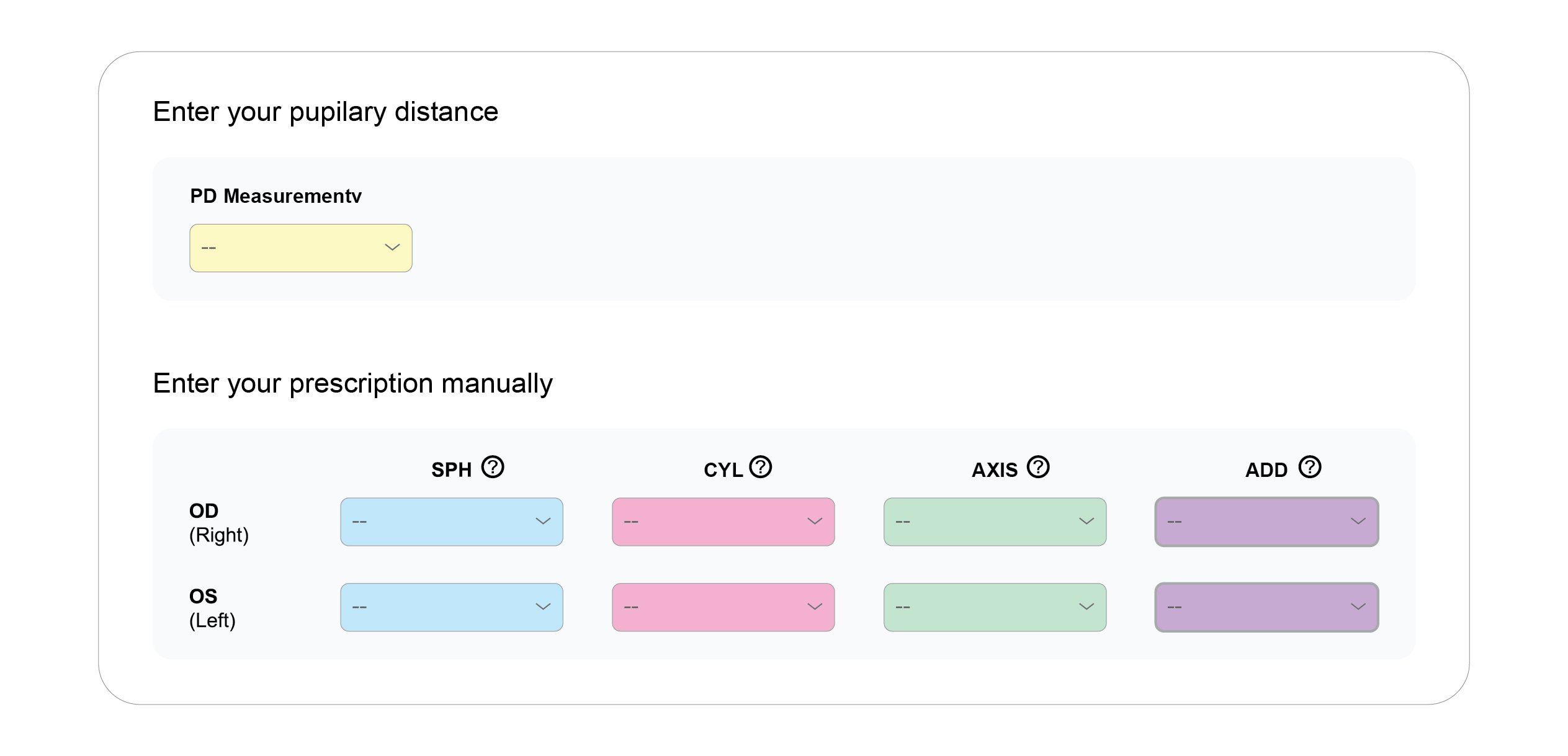
OD is an abbreviation for the Latin term oculus dexter which means right eye. Notice that the right eye information is asked for first even though we typically read from left to right.
OS is an abbreviation of the Latin oculus sinister which means left eye. That will be referenced on the far right column of the prescription.
SPH is short for sphere. The sphere of your prescription indicates the power on the lenses that is needed to see clearly. A plus (+) symbol indicates the eyeglass wearer is farsighted. A minus (-) symbol indicates that the eyeglass wearer is nearsighted.
CYL is short for cylinder. The cylinder indicates the lens power necessary to correct astigmatism. If the column has no value (is blank), it indicates that the eyeglass wearer does not have astigmatism. If this is the case on your prescription, you can leave it blank when entering it in.
AXIS is a prescription will include an axis value for those with astigmatism. This number represents the angle of the lens that shouldn't feature a cylinder power to help correct your astigmatism.
ADD is short for "additional correction." This is where details about bifocals, multifocal lenses or progressive lenses would appear.
Aesthetically, Sleepy Gimp Comics Portable would likely embrace modesty and improvisation. Hand-drawn panels, limited color runs, and visible corrections or smudges can communicate authenticity and immediacy. The artwork might favor loose linework, soft washes, and generous negative space, emphasizing pauses between images. Panel transitions could be elliptical rather than expository, relying on reader inference to fill gaps—a technique aligned with Scott McCloud’s idea of closure but applied to a gentler tempo. Temporality in these comics could be elastic: a single page might linger on the protagonist stirring tea for several panels, while a sudden, dreamlike collapse of chronology could compress weeks into one image. Such manipulations of time harmonize with sleep’s dream logic and with the meditative rhythms of low-key, character-driven comics.
In sum, Sleepy Gimp Comics Portable imagines a compact, tactile form of comics that foregrounds slowness, marginal perspectives, and DIY aesthetics. Its smallness is both practical and philosophical: it permits intimate storytelling, experimental timing, and alternative distribution that resists mainstream norms. Whether realized as dreamy vignettes, quiet memoir, or soft surrealism, a portable Sleepy Gimp offers readers a pocket-sized refuge—an object that privileges feeling over spectacle and invites a more patient, attentive mode of looking. sleepy gimp comics portable
Of course, a title like Sleepy Gimp Comics Portable must be treated with care in language and marketing. Words carry histories, and creators should be mindful of how terms like "gimp" might be received. Clear statements about intent, respectful representation, and collaboration with communities depicted can mitigate harm and align the project with ethical practice. Likewise, accessibility considerations—legible type, high-contrast versions, or digital alternatives—ensure the portable object does not exclude the very readers it wishes to honor. In sum, Sleepy Gimp Comics Portable imagines a
Production-wise, making a portable comic encourages experimentation with constraints. Limited page counts force narrative concision; grayscale or two-color printing reduces costs but can spur inventive use of contrast and texture. Digital templates for fold-and-cut layouts enable creators to produce saddle-stapled zines without industrial bindery. Crowdfunding or print-on-demand services can underwrite small runs, but many artists choose hands-on approaches—risograph printing, photocopied editions, or hand-colored variations—that make each copy slightly unique. This artisanal quality resonates with the sleepy, imperfect ethos of the project. low-tech place to rest.
Critically, there is an argument that miniature works punch beyond their size: the small form can intensify intimacy and invite repeated readings. Like postcards or pocket poems, compact comics compress affect into concentrated units. The reader’s proximity—physically holding the work—reduces distance and can amplify empathy. For a character like Sleepy Gimp, who inhabits marginal tempos and perspectives, this compressed intimacy is not a limitation but a feature; it mirrors the character’s inward scale and fosters a deep, personal rapport.
Portability also supports alternative distribution models that reinforce community. Mini-comics are traded at zine fests, slipped into bookstore stacks, sold on consignment at coffee shops, or exchanged at DIY reading groups. A Sleepy Gimp Portable could become a social object—a thing to be gifted, annotated, and passed along. These practices are important: they create micro-economies and networks of care that circulate work outside ad-driven feeds and algorithmic marketplaces. In places where attention is scarce and screens demand constant engagement, a small printed comic offers a countervailing, low-tech place to rest.
*Discount applied on the current website price at the time of order. Offer only valid for new customer first contacts order over $10. Maximum discount of $100. Cannot be combined with any other offers. Promotions are subject to change without notice. We reserve the right to cancel orders that are in breach of the terms and conditions of this offer.



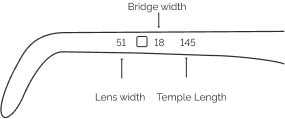
| Lens Width | Bridge Width | Temple Length | |
|---|---|---|---|
| XS | < 42 mm | < 16 mm | <=128 mm |
| S | 42 mm - 48 mm | 16 mm - 17 mm | 128 mm - 134 mm |
| M | 49 mm - 52 mm | 18 mm - 19 mm | 135 mm - 141 mm |
| L | >52 mm | >19 mm | >= 141 mm |
Buying eyewear should leave you happy and good-looking. Use our sizing tool to find frames that best fit your unique facial measurements.
Grab a regular card with a magnetic stripe on the back. Student IDs, credit cards and gift cards work well to start our online PD tool.
You may have received our paper PD measurement tool in your recent online order. In order to use this tool, place the ruler on your eyes so that the "0" lines up at the centre in between your eyes. Add up the two numbers, to get your PD. See example below:
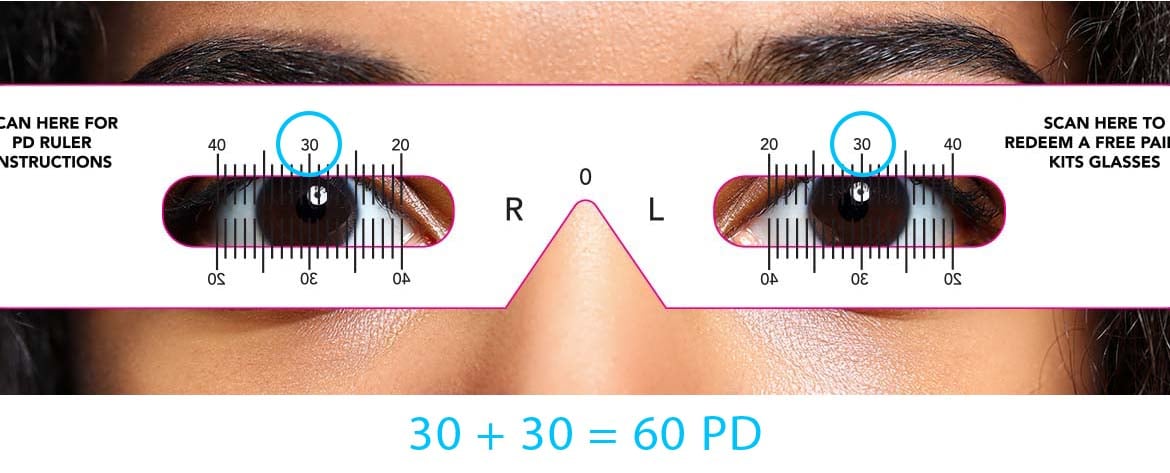
Click on this link to download and print your own PD measurement tool.
DOWNLOAD



 Check order status
 Place reorder
 Chat with us





 Use your insurance
 Help
Help